Skip to content
Landrake Parish Council
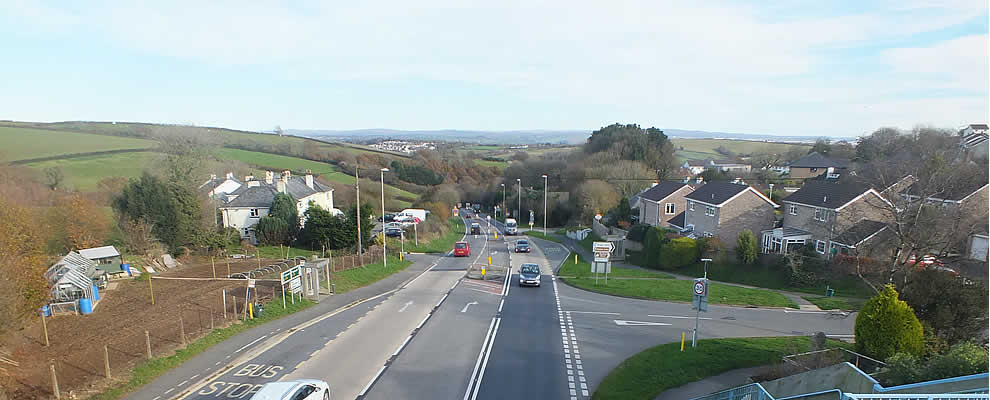
The A38 running through Landrake Village

Notices and News

Some interesting results of Landrake traffic surveys

The Parish Council holds an advisory role in highways matters, with Cornwall Council acting as the responsible authority. To provide informed guidance, the Council has reviewed potential measures to improve traffic management within the village, supported by baseline data.

Residents raised two primary concerns:
• Vehicles exceeding the 20mph limit on Tideford Road, creating safety risks.
• The village being used as a shortcut between the westbound A38 and local roads via Back Lane, School Road, and Tideford Road.

Cornwall Council Highways conducted a week-long speed survey on Tideford Road from 30 October to 6 November. This period included two school holiday days, a weekend, and three standard weekdays. The results showed that 9.0% of vehicles exceeded 20mph (6.0% exiting and 16.2% entering), with no vehicles recorded above 30mph. Although overall compliance was high, the data indicates that speed management measures warrant further consideration.

To assess the possibility of rat running, the Parish Council conducted its own survey on 26 March between 08:00 and 09:00, the morning peak period. Councillors monitored vehicle movements into and out of the village and recorded the time each vehicle spent within the village.
Key findings from this one-hour sample include:
• No rat running was observed. Only one vehicle entered via Back Lane and exited via Tideford Road, spending nearly ten minutes in the village—likely for a school drop off.
• Back Lane was used more frequently than anticipated, with 74 vehicles entering—comparable to the 81 entering via Memorial Road.
• Thirty-one vehicles exited via Tideford Road, while 110 exited via Memorial Road.
• Peak movements corresponded with school start times.
• Vehicles entering via Back Lane typically remained in the village for 10–15 minutes, whereas those entering via Memorial Road tended to stay for 0–5 minutes.
While this survey does not provide evidence of rat running during the observed period, it does not rule out the possibility under different circumstances, such as heavy congestion or lane blockages on Notter Hill.

Download document (pdf)

11th March 2026

Attention all dog owners! When your dog has done its business, please do yours!

There is no poo fairy If you need a poop bag please take one

Attention all dog owners! When your dog has done its business, please do yours!

When it comes to marking territory, it’s a dog-eat-dog world out there. With every poop, your dog is leaving their personal mark for other dogs to check out. Now, imagine if every dog parent left their dog’s calling card where it dropped. Pavements, parks, paths, and front lawns would be littered with poop.

Scraping off shoes was a normal occurrence back in the 60s but should not be so now. Toxic with parasites and bacteria, dog poo creates long-term problems for animals, people, and even ecosystems.

So, let’s talk about some of the dog poop problems and why such a small thing is such a big deal and how we personally can help change things for the better.

Dog waste poses significant risks to biodiversity and public health. Contrary to belief, adding dog poop to soil does not benefit nutrient-poor ecosystems.

The effect multiplies with many dogs, creating serious environmental issues. Waste washed into waterways uses up oxygen, releases ammonia, and encourages harmful algae blooms, which can kill aquatic life and pose risks to pets and humans through pathogens like roundworms and salmonella.

Dog waste can cause blindness in humans, particularly children, through a parasitic infection called toxocariasis. Roundworm eggs (Toxocara canis) in dog faeces contaminate soil or sand, and if ingested, can hatch larvae that migrate to the eye, causing severe damage or blindness. Regular, immediate cleanup of pet waste is essential to prevent this risk.

Notably, dog faeces have been linked to livestock miscarriages due to parasites, and human infections can cause severe health problems, especially in children who play outdoors. Wild animals spread their waste across wide areas within their habitat, while dogs concentrate nutrient-rich droppings from commercial food in sensitive natural spaces.

The solution is simple: you can help by always picking up after your dog to protect the environment, wildlife, and public health.

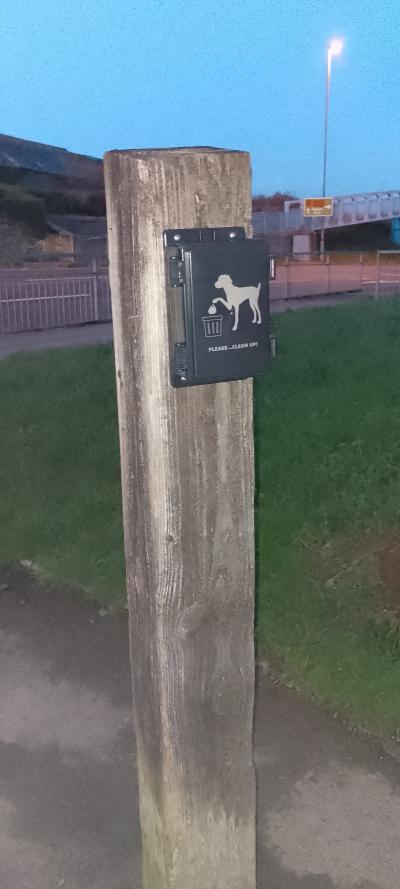
The parish council has installed a free doggy poop bag post at the end of North Road as a trial for those people who forget to have a bag in their pocket. It is for a trial period and if there's a noticeable improvement the trial can be extended with more posts around the village. The bags are currently being re-filled weekly but will be more frequent if needed.

11th February 2026

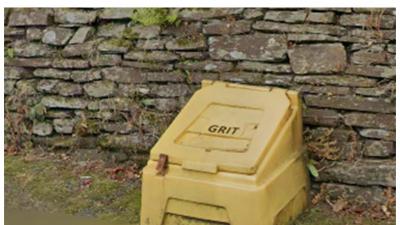
How much salt is needed to clear ice?

On a chilly winter's morning, it can be frustrating to find the salt bins empty and the paths dangerously icy. This raises an important question: are we actually using more salt than necessary?

Using excessive amounts of salt not only squanders resources, but it can also have a negative impact on the environment by affecting soil and water quality. That's why it's important to follow official recommendations on the appropriate quantity of salt to use for keeping paths safe.

According to the Met Office’s winter safety guidelines, you may be surprised at how little salt is actually required to keep surfaces safe.

If there’s snow on the ground, clear it away first if possible. You can then melt any remaining snow or prevent black ice by spreading a modest amount of salt over the cleared area; as recommended by the Met Office, a tablespoon or a handful per square metre should do the job. If you're clearing a driveway, that's about a mug full for a typical car-sized patch.

Take extra care when there's the risk of black ice. But what is black ice? Black ice is a thin, transparent layer of ice that forms when water freezes on very cold roads or pavements. Despite the name, it isn't actually black – it's almost invisible because it contains no air bubbles and blends into the tarmac.

Clearing your path or driveway - the snow code

23rd January 2026

Monthly Tamar Tag Admin Fee on Hold

If you have one of the Tamar Tags, you will no doubt be aware that proposals to increase the monthly admin fee from 80p to £2.00 were recently publicised.

Following public outcry and political pressure, the Tamar Crossings Joint Committee met on Monday 12 January for an Extraordinary Meeting to consider proposals relating to the Tamar Tag monthly account administration fee.

Members agreed that a public consultation and engagement exercise will be undertaken before any decision is made on changing the fee. During this period, the monthly admin fee will remain at 80 pence.

Updates on the consultation process will be published in due course at: www.tamarcrossings.org.uk/news

Tamar Tag Admin Fee Proposal

13th January 2026

›› News Archive 2025